Plant profile
Wild asparagus
Asparagus acutifolius
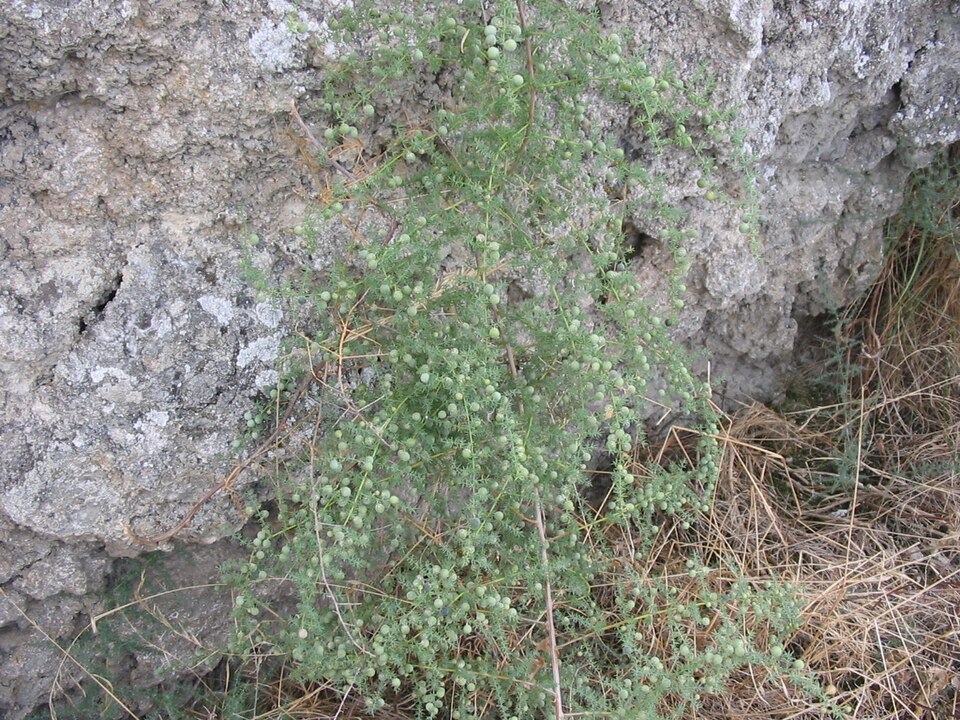
Evergreen perennial plant of the Mediterranean maquis, with thorny stems and edible spring shoots.
Did you know?
It is the "wild relative" of cultivated asparagus (Asparagus officinalis): its thinner, slightly bitter shoots are highly prized in traditional Mediterranean cuisine.
The plant is dioecious, with male and female flowers on separate individuals: only female plants produce the red berries.
Its thorny, tangled branches make it an ideal refuge plant for small birds and other wildlife.
In the garden
Origin Donato da Giancarlo Schipani
Zone teaching gardens
Quantity 10
Main function FoodBiodiversityScreening / Hedge
Toxicity Berries toxic if ingested (humans and animals); shoots edible when cooked
Learn more Wikipedia (opens in a new tab)
Information
Flowering period September–November (inconspicuous flowers; red berries in winter)
Fruiting period October–December (red berries)
Exposure Partial shade / Shade
Water needs Low
Tolerated temperature -10°C / +40°C
Soil type Well-drained, calcareous, even poor or rocky
Foliage type Evergreen
Flower colour Yellowish-green
French Asperge sauvage
German Wilder Spargel
Spanish Espárrago triguero
Portuguese Espargo-bravo
Arabic الهليون البري
Ukrainian Холодок гостролистий (Дика спаржа)
Scientific classification
Division Magnoliophyta
Class Liliopsida
Order Asparagales
Family Asparagaceae
Genus Asparagus