Plant profile
Ginkgo / Maidenhair tree
Ginkgo biloba
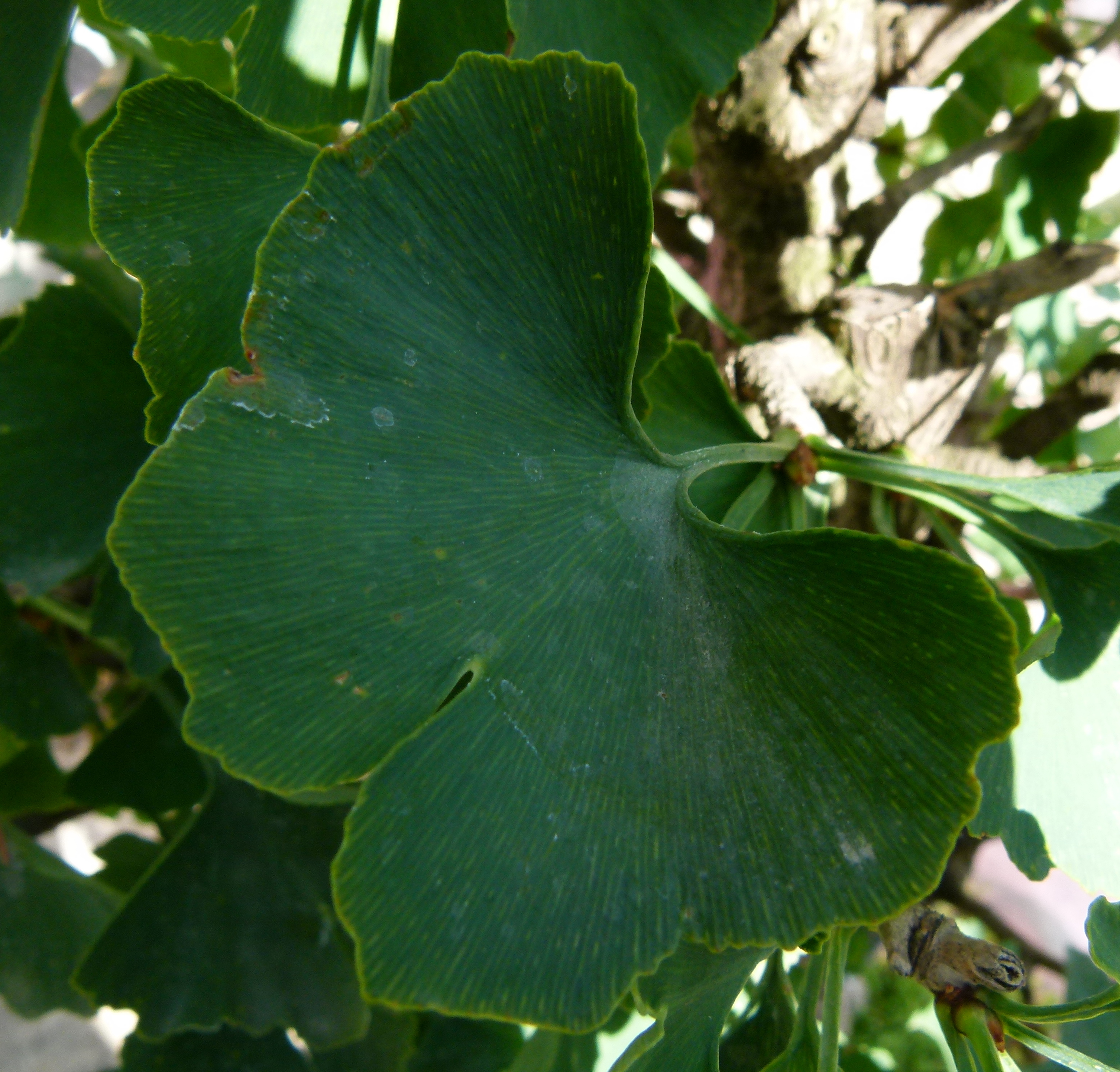
A "living fossil" tree with distinctive fan-shaped, bilobed leaves that turn golden in autumn.
Did you know?
It is considered a "living fossil": the species has remained virtually unchanged for over 200 million years, appearing well before the dinosaurs.
Some specimens survived the atomic bombing of Hiroshima in 1945, sprouting again near the epicenter the following year.
It is a dioecious genus (separate male and female trees): to avoid the unpleasant smell of ripe seeds, almost only male trees are planted along city streets.
In the garden
Origin Donato dai Vivai Forestali Regione Campania
Zone north-east flowerbed
Quantity 1
Main function OrnamentalBiodiversity
Toxicity Seeds (if eaten in quantity) and seed pulp mildly toxic/irritant to humans and animals
Learn more Wikipedia (opens in a new tab)
Information
Flowering period March–April (inconspicuous flowers, dioecious species)
Fruiting period October–November (drupe-like seeds, strong-smelling on mature female trees)
Exposure Full sun / Partial shade
Water needs Medium
Tolerated temperature -30°C / +40°C
Soil type Adaptable, well-drained; tolerates poor soils and urban pollution
Foliage type Deciduous
Flower colour Inconspicuous (greenish); leaves turn golden yellow in autumn
French Ginkgo / Arbre aux quarante écus
German Ginkgo / Fächerblattbaum
Spanish Ginkgo / Árbol de las pagodas
Portuguese Ginkgo / Nogueira-do-japão
Arabic الجنكة (الجنكو بيلوبا)
Ukrainian Гінкго дволопатеве
Scientific classification
Division Ginkgophyta
Class Ginkgoopsida
Order Ginkgoales
Family Ginkgoaceae
Genus Ginkgo