Plant profile
Jerusalem artichoke / Sunchoke
Helianthus tuberosus
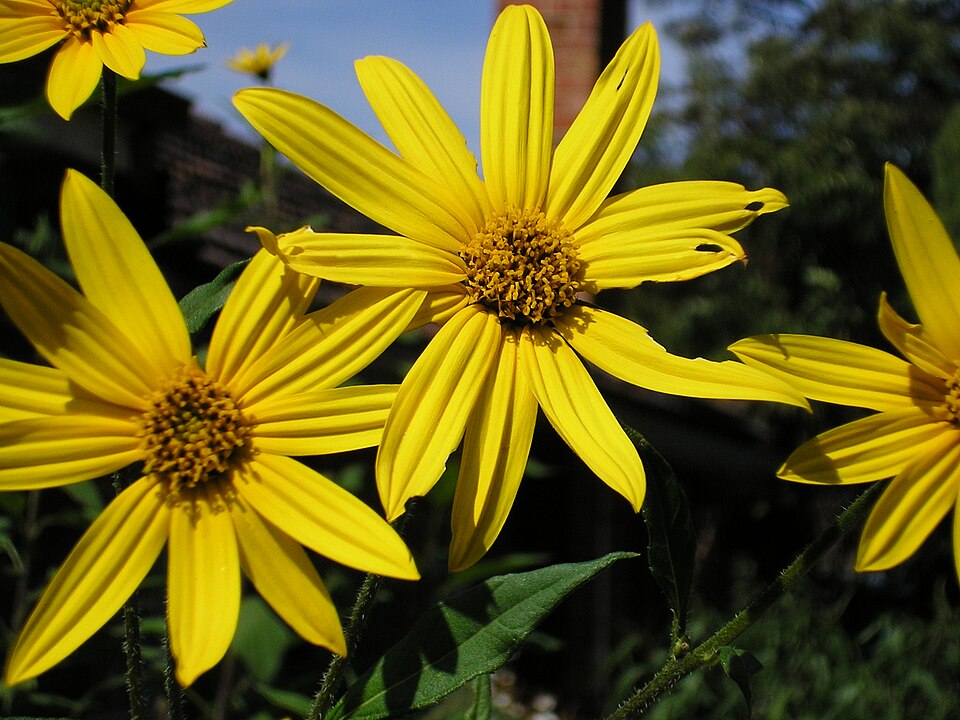
Tall, vigorous perennial tuberous herbaceous plant, with yellow flowers similar to small sunflowers and edible tubers.
Did you know?
Despite its name, the Jerusalem artichoke has no botanical connection to the Brazilian Tupinambá tribe: the name arose from a historical confusion at the time of its introduction to Europe in the 17th century.
Its tubers are rich in inulin, a carbohydrate not fully digestible by humans, which is why consumption is traditionally associated with a carminative effect.
It is considered potentially invasive due to the ability of its tubers to regenerate new plants even from small fragments left in the soil.
In the garden
Origin autoctono
Zone east
Quantity –
Main function FoodPollinator attractionBiodiversity
Toxicity Not toxic (edible tubers); potentially invasive species
Learn more Wikipedia (opens in a new tab)
Information
Flowering period September–October
Fruiting period October–March (tuber harvest)
Exposure Full sun
Water needs Medium
Tolerated temperature -25°C / +35°C
Soil type Adaptable, even poor; prefers deep, well-drained soils
Foliage type Deciduous (tuberous herbaceous)
Flower colour Yellow
French Topinambour
German Topinambur (Erdbirne)
Spanish Tupinambo / Pataca
Portuguese Tupinambo
Arabic الطرطوفة (الخرشوف القدسي)
Ukrainian Топінамбур (Земляна груша)
Scientific classification
Division Magnoliophyta
Class Magnoliopsida
Order Asterales
Family Asteraceae
Genus Helianthus