Plant profile
Common lantana
Lantana camara
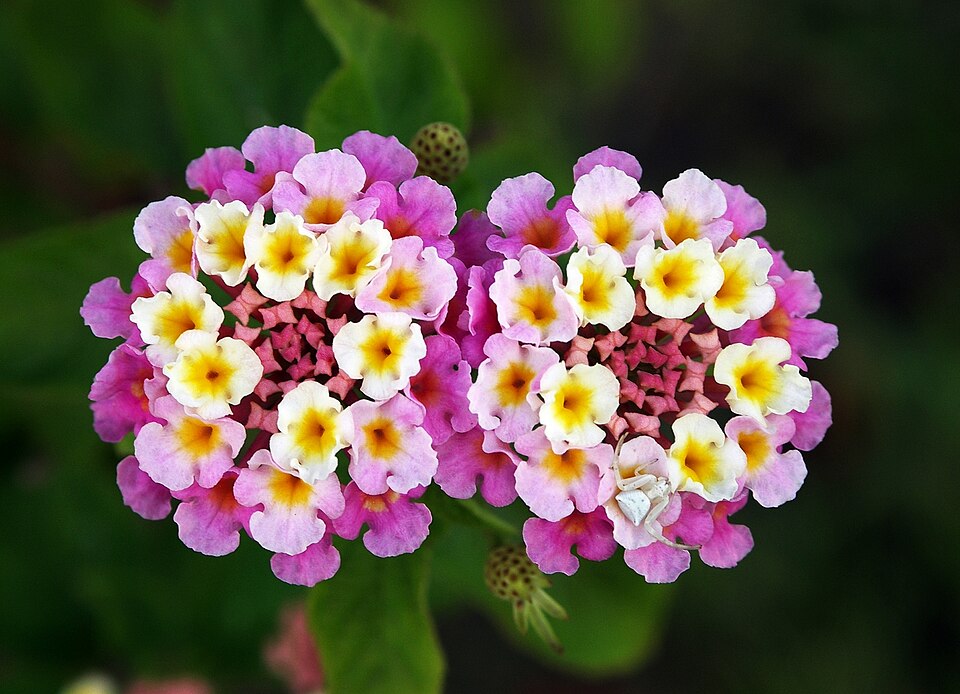
Ornamental shrub with flowers arranged in clusters that change color during flowering.
Did you know?
Lantana flowers change color after pollination, a visual signal indicating to insects which flowers still contain nectar.
Native to tropical America, it is now considered one of the most invasive plant species in many tropical regions of the world.
All parts of the plant, particularly the unripe berries, are toxic to humans and livestock.
In the garden
Origin Donato da Giovanna Della Pietra
Zone north-east flower bed
Quantity 2
Main function OrnamentalPollinator attractionGround cover / Anti-erosion
Toxicity Toxic: leaves and unripe berries toxic to humans and animals; invasive species in some areas
Learn more Wikipedia (opens in a new tab)
Information
Flowering period May–October
Fruiting period August–November (black berries, toxic)
Exposure Full sun
Water needs Low–Medium
Tolerated temperature 0°C / +40°C (sensibile al gelo)
Soil type Well-drained, even poor; tolerates drought and intense heat
Foliage type Evergreen (in mild climates) / Semi-deciduous
Flower colour Yellow, orange, pink, red, white (changeable within a single flower head)
French Lantanier
German Wandelröschen
Spanish Lantana / Bandera española
Portuguese Camará
Arabic اللنتانة (العنبر)
Ukrainian Лантана камара
Scientific classification
Division Magnoliophyta
Class Magnoliopsida
Order Lamiales
Family Verbenaceae
Genus Lantana