Plant profile
Downy oak
Quercus pubescens
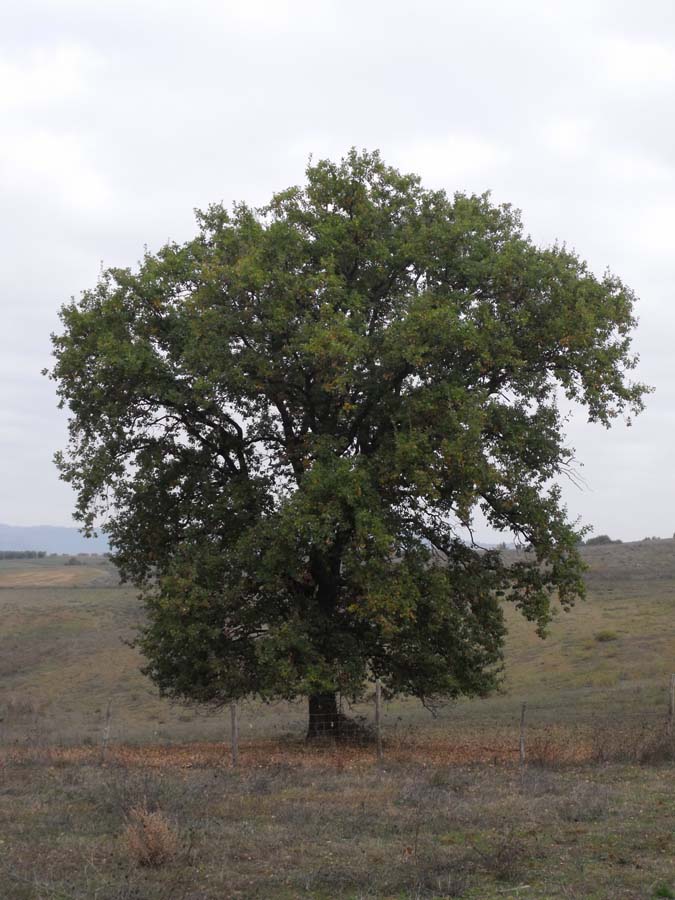
Hardy deciduous tree typical of Mediterranean hill woodlands, with hairy lobed leaves and acorns.
Did you know?
It is one of the most drought-resistant oaks among European species, which is why it dominates the thermophilic woodlands of the more arid Mediterranean hill areas.
It is a marcescent species: it retains its dry leaves on the branches during winter, shedding them only in spring with new growth.
Its acorns have for centuries been an emergency food resource for humans (after treatment to remove tannins) and fodder for free-range pig farming.
In the garden
Origin autoctono
Zone sacred area
Quantity 2
Main function BiodiversityOrnamentalWindbreak
Toxicity Acorns toxic if ingested raw in large quantities (tannins), especially for dogs
Learn more Wikipedia (opens in a new tab)
Information
Flowering period April–May (inconspicuous flowers)
Fruiting period September–October (acorns)
Exposure Full sun / Partial shade
Water needs Low
Tolerated temperature -20°C / +40°C
Soil type Calcareous, poor, well-drained; excellent drought resistance
Foliage type Deciduous (marcescent, retains dry leaves in winter)
Flower colour Yellowish-green (catkins)
French Chêne pubescent
German Flaum-Eiche
Spanish Roble pubescente / Quejigo
Portuguese Carvalho-pubescente
Arabic البلوط الزغبي
Ukrainian Дуб пухнастий
Scientific classification
Division Magnoliophyta
Class Magnoliopsida
Order Fagales
Family Fagaceae
Genus Quercus