Plant profile
Common lilac
Syringa vulgaris
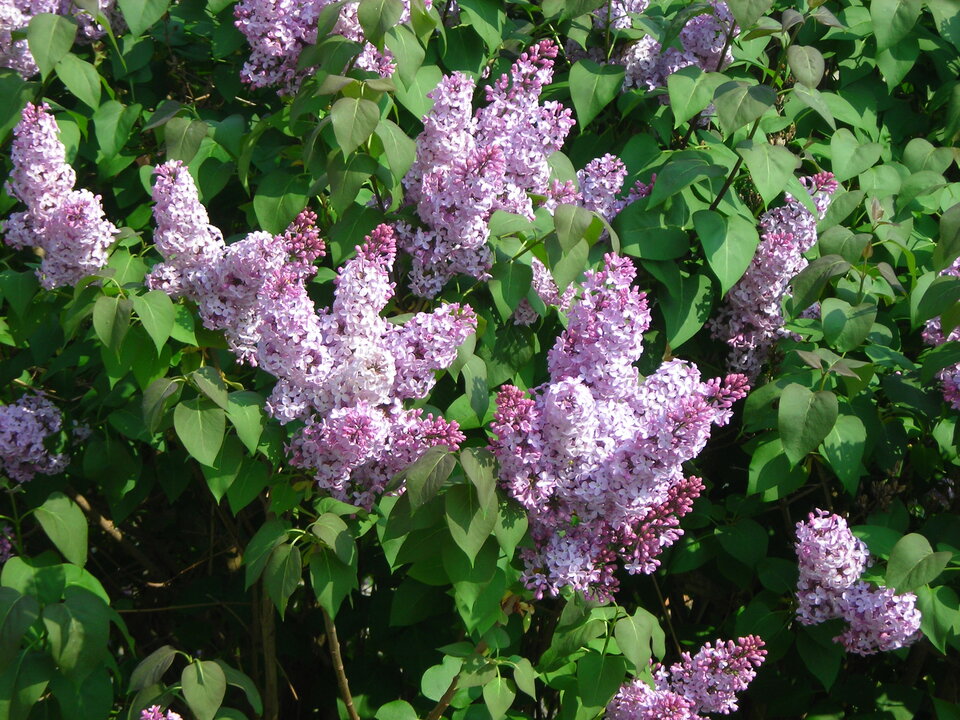
Highly fragrant deciduous shrub with large pyramidal panicles of small purple, lilac or white flowers, a symbol of spring in temperate gardens.
Did you know?
The genus name "Syringa" derives from the Greek "syrinx" (reed, pipe): legend says that the god Pan cut the hollow stems of the lilac to make his pipe.
Native to the Balkans and western Asia, the lilac was introduced to western Europe in the 16th century by Ottoman botanists in Vienna, quickly spreading as a garden plant.
Lilac requires a period of winter cold (vernalization) to flower abundantly: in tropical or subtropical climates without cold winters it flowers very little or not at all.
In the garden
Origin Donato da Natalina Mercugliano e Rocco Luisi
Zone well
Quantity 1
Main function OrnamentalPollinator attractionAromatic
Toxicity Not toxic
Learn more Wikipedia (opens in a new tab)
Information
Flowering period April–May
Fruiting period September–October (woody capsules)
Exposure Full sun
Water needs Medium
Tolerated temperature -30°C / +35°C
Soil type Fertile, neutral-alkaline, well-drained; prefers deep, cool soils
Foliage type Deciduous
Flower colour Purple / Lilac / White (depending on cultivar)
French Lilas commun
German Gewöhnlicher Flieder
Spanish Lilo común
Portuguese Lilás
Arabic الليلك (البنفسجي)
Ukrainian Бузок звичайний
Scientific classification
Division Magnoliophyta
Class Magnoliopsida
Order Lamiales
Family Oleaceae
Genus Syringa