Plant profile
Spanish dagger
Yucca gloriosa
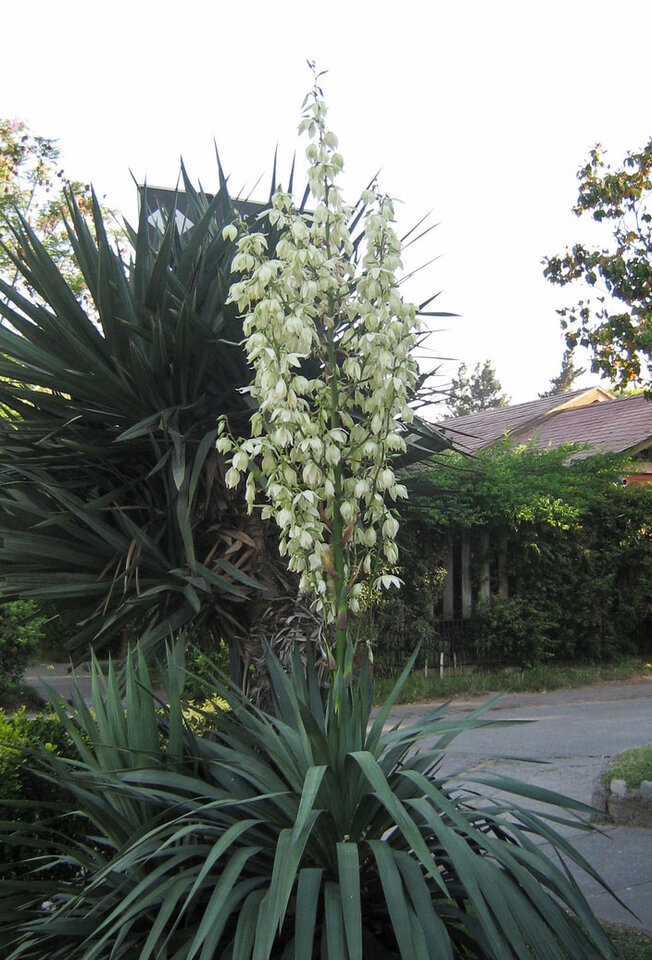
Evergreen plant native to the sandy coasts of the south-eastern United States, with rosettes of stiff, pointed leaves and tall panicles of white bell-shaped flowers.
Did you know?
In the wild, yuccas are pollinated only by small moths of the genus Tegeticula, which lay their eggs in the flower: that is why in Europe they rarely set seed.
The name "yucca" comes from a mix-up with "yuca", the Caribbean name for cassava, a completely different plant.
The epithet "gloriosa" celebrates its spectacular flower spike, which can exceed two metres in height.
In the garden
Origin –
Zone –
Quantity –
Main function OrnamentalAnti-erosion
Toxicity Mildly toxic (saponins, especially for dogs and cats); very sharp leaves
Learn more Wikipedia (opens in a new tab)
Information
Flowering period July–October
Fruiting period Rare in Europe (capsules; the pollinating insect is absent)
Exposure Full sun
Water needs Low
Tolerated temperature -15°C / +40°C
Soil type Very well-drained, sandy or stony, even chalky
Foliage type Evergreen (stiff leaves with a sharp tip)
Flower colour Creamy white, sometimes tinged with purple
French Yucca glorieux
German Kerzen-Palmlilie
Spanish Yuca gloriosa
Portuguese Iuca
Arabic يوكا
Ukrainian Юка славна
Scientific classification
Division Magnoliophyta
Class Liliopsida
Order Asparagales
Family Asparagaceae
Genus Yucca
Photo: Penarc, CC BY-SA 4.0